
How to Choose Beauty Products for Your Needs
Introduction
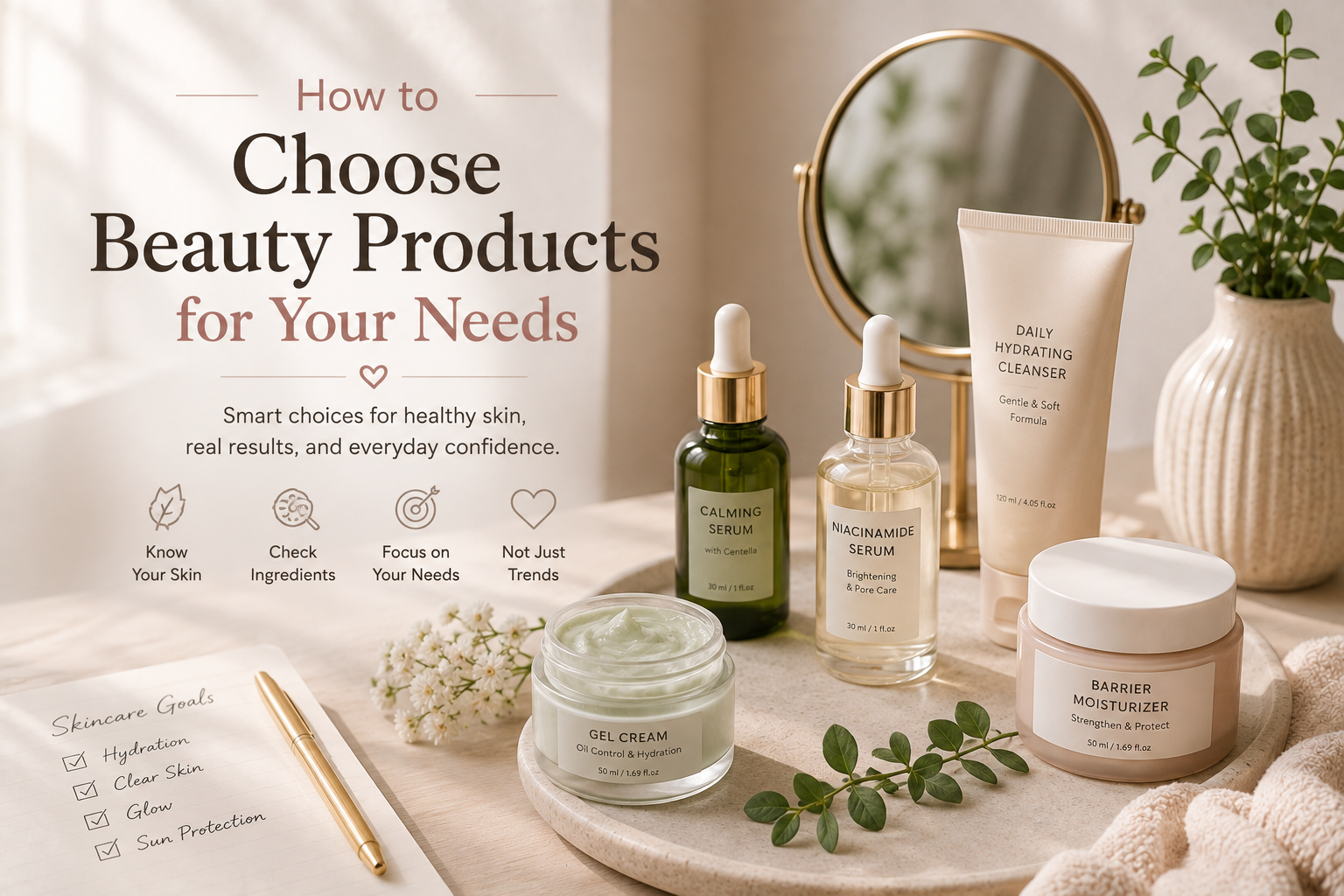
Choosing beauty products for your needs can feel overwhelming, especially with so many products, ingredients, trends, and recommendations everywhere. A product that works perfectly for someone else may not necessarily work for you.
The best approach is to understand what your skin actually needs before adding new products to your routine. Your skin type, sensitivities, and specific concerns should always matter more than what is currently trending online.
In this guide, you’ll learn how to choose beauty products for your needs and build a routine based on what works best for you.
1. Start by Understanding Your Skin Type
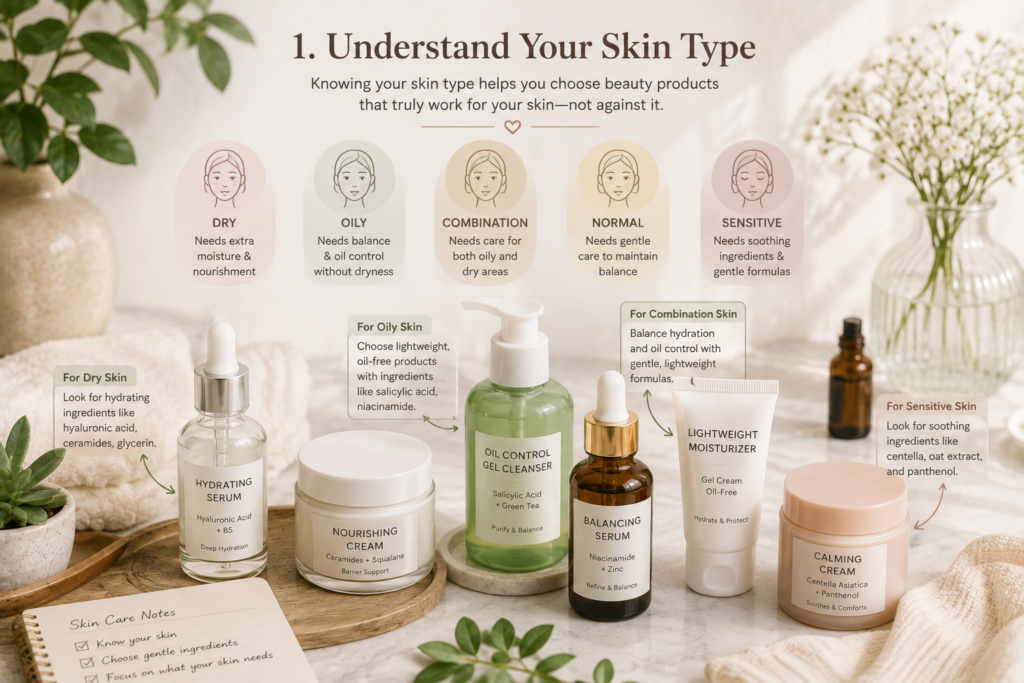
One of the most important steps when choosing beauty products is knowing your skin type.
Your skin may be:
- Dry
- Oily
- Combination
- Normal
- Sensitive
Different skin types have different needs. For example, dry skin may need products that provide moisture and help support the skin barrier, while oily skin may benefit from lightweight formulas that do not feel heavy.
Understanding your skin type can help you avoid buying products that are unsuitable for your skin and make it easier to choose products that support your everyday routine.
2. Consider Your Skin Sensitivities
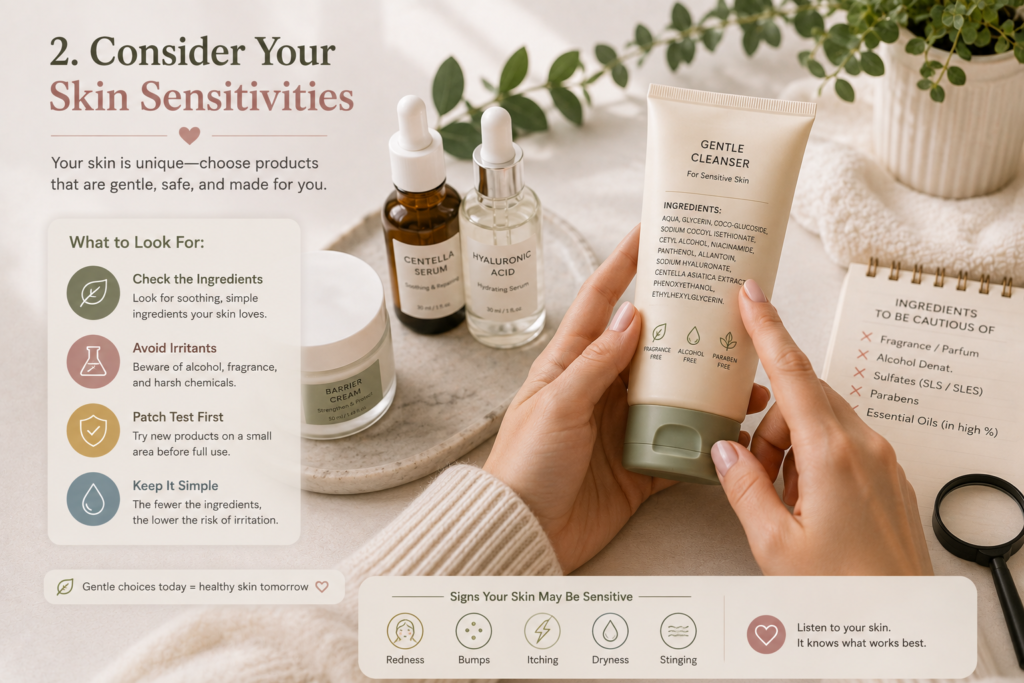
If your skin becomes irritated easily, feels uncomfortable after using certain products, or reacts to particular ingredients, sensitivity should be an important part of your decision.
Pay attention to how your skin responds to products. Ingredients that work well for one person may cause irritation for another.
When trying something new, it can be helpful to introduce one product at a time rather than changing your entire routine at once. This makes it easier to notice how your skin reacts.
Choosing products carefully is especially important when your skin is sensitive or easily irritated.
3. Identify the Problem You Want to Address
Before buying a new beauty product, ask yourself:
What does my skin actually need right now?
You may be looking for help with:
- Dryness
- Excess oil
- Breakouts
- Uneven-looking skin
- Dark spots
- Dullness
- Dehydration
Having a clear goal can prevent you from buying multiple products that you do not really need.
Instead of choosing products randomly, focus on the concern you want to address and look for products designed to support that specific need.
4. Choose Beauty Products for Your Needs — Not Just Because They’re Trending
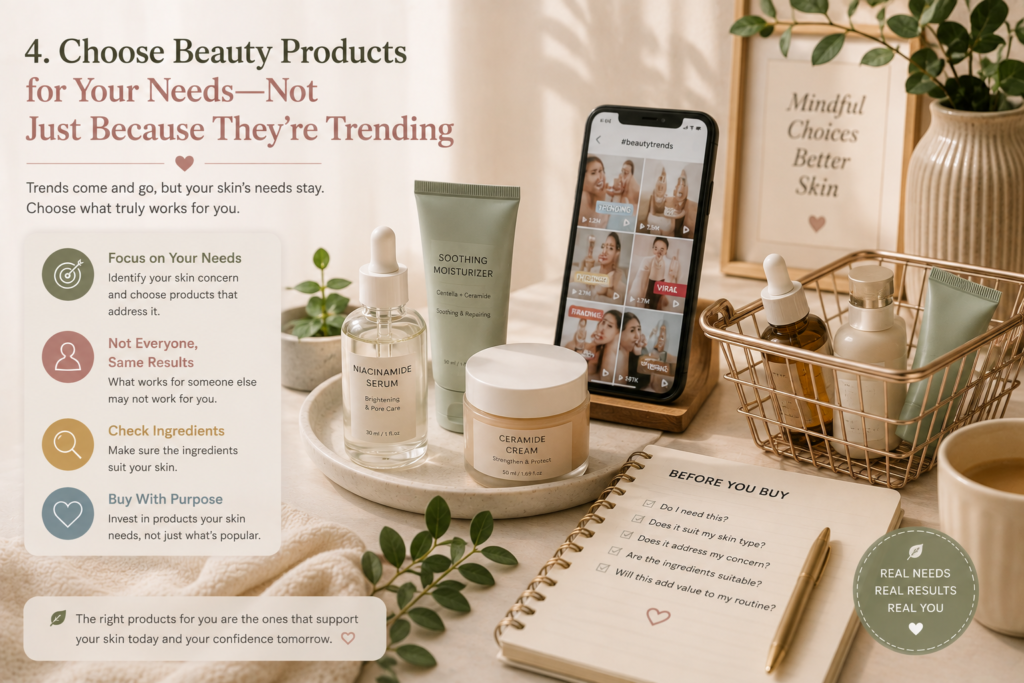
A product becoming popular on social media does not automatically mean it will be right for your skin.
Beauty trends can be fun to explore, but your personal needs should always come first. A trending product may work beautifully for someone with a completely different skin type or concern.
Before buying something because everyone is talking about it, consider:
- Is it suitable for my skin type?
- Does it address a concern I actually have?
- Are the ingredients appropriate for me?
- Do I really need it in my routine?
Learning to choose beauty products for your needs instead of simply following trends can help you build a more practical and personalized beauty routine.
5. Pay Attention to Ingredients
You don’t need to become an expert in every ingredient, but it is helpful to understand what you are putting on your skin.
Look at the product description and ingredient information to understand what the product is designed to do.
If you already know that certain ingredients do not work well for your skin, avoid products containing them.
It is also important to remember that more ingredients do not always mean a better product. Sometimes, a simple routine with products that suit your needs can be more useful than using too many products at once. Understanding ingredients can also help you choose beauty products for your needs more carefully.
6. Introduce New Products Slowly
Trying several new beauty products at the same time can make it difficult to understand what is helping your skin—or what may be causing a problem.
When possible, introduce new products gradually.
This gives you time to:
- Observe how your skin responds
- Notice any irritation or discomfort
- Understand whether the product fits into your routine
Taking your time can help you make better decisions instead of constantly replacing products.
7. Build a Routine That Works for You
A good beauty routine does not have to include dozens of products.
The most important thing is choosing products that fit your skin, lifestyle, and personal needs.
Your routine may change over time, and that’s completely normal. Your skin can have different needs depending on factors such as the weather, your environment, and your current concerns.
The goal is not to have the most complicated routine. The goal is to create one that feels practical and works well for you.
Making thoughtful choices before buying is an important part of building a practical beauty routine. You may also find our guide on 10 Ways to Shop Smarter Online When Buying Fashion and Beautyhelpful for making more informed shopping decisions.
Final Thoughts
Learning how to choose beauty products for your needs starts with understanding your skin instead of simply following what is popular.
Start with your skin type, consider any sensitivities, identify the concerns you want to address, and think carefully before buying products just because they are trending.
When you choose products based on what your skin actually needs, building a beauty routine can become simpler, more practical, and more personal.
The best beauty products aren’t necessarily the most popular ones—they’re the ones that make sense for you. ✨